Tuesday, April 28, 2009

Tomato goodness

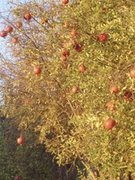
I moved house on 1 April this year, and we've been lucky enough to inherit a garden, with several different varieties of tomatoes, all of which are producing copious crops.

Thus far we have cooked
  • Meditteranean tomato and rice soup,
  • Oven semi-dried tomatoes
  • tomato sauce with onion and garlick
  • tomato, tuna, mushroom and spinach sauce,
  • Pizza with rich tomato, red onion and redwine sauce
  • Bruschetta (on home-made bread)
  • Vegetable Lasagne (in the freezer)
  • and of course Greek Salad - both Sakturian and Horiatki variant.
I now have a home-office (adjacent to the kitchen). I popped out into the garden mid-morning and discovered that we needed to harvest a few more tomatoes. So today I've done my accounts to the smell of slow roasting tomato sauce, with home-grown thyme, olive oil, and white onion, inspired by Hugh Fearnley-Whittingstall's recipe for roasted tomato sauce here. I haven't decided whether to go the whole hog and sieve it or not, or just freeze it skins and all.

We have a few more red tomatoes to come, I think, and then it is on to the green tomato chutney recipe. Luckily this month's Cuisine magazine, and last week's Press Zest section both have recipes. I have bought green apples, raisins and ginger, so we are now ready to cook!

Monday, December 24, 2007

Christmas Cake 2007

One of the delights of being an auntie and a godmother is cooking with my nephew and niece.

Two weeks ago we made the Christmas Cake, yesterday the Marzipan (there was none left pre-made in the stores!) and today I iced the cake with Royal icing.

Ella, Finn and I had great fun making the cake. Ella (22 months) concentrated intently on cutting the butter, sifting the flour, measuring the sugar and mixing the flour and the dried fruits, and spooning the mixture in to the tin. Finn (nearly 5) was in charge of keeping an eye on the mixer as the butter and sugar creamed, and then the eggs were added one by one.

The recipe was based on the Cordon Bleu cookery course my mother subscribed to in weekly installments when I was a baby. Week 20 had the Christmas cake in it. Its the same recipe we used when I was a child, and I recall making it on my own for the first time when I was 8 or 9.

A warning though, if you plan on letting your 9 year old loose in the kitchen. I did a lot of cooking from a very young age, and was mostly fine on my own. But then there was the day I put half a pound of butter on to melt for icing for a banana cake (way too much butter!) Being inclined to rush things I put it on high. And then went and watched some TV and forgot about it..until the smell of smoke reached my parents who were wallpapering at the other end of the house, and came to the kitchen to find the wall on fire. Luckily, Mum had been reading a book on fire safety to my brother the night before, and remembered the best way to put out an oil fire was to soak a towel in water and put it on the pan. This did most of the work, the extinguisher the rest, and I was very much persona non grata a for a while....

Anyway, on to happier things, here is the recipe as we made it two weeks ago. I've adapted to metrics from the original to use the premix dried fruit rather than individual measures, and indicated where a 2 or 5 year old helper can join in.

Family Christmas Cake
Line a 20cm cake tin (round or square) with a double thickness of greaseproof paper.

Heat the oven to 180 degrees.

Dice 200g butter (if using from the fridge). Your 2 year old can be kept happy by cutting the butter into smaller bits using a toddler's knife (Bob the Builder worked well for us!) then puttin gthe butter into the mixing bowl. Cutting it helps it soften prior to creaming it with sugar.

Have your 5 year old measure 1 cup of flour (about 8 oz/225 g), 1/2 t cinnamon and 1/2 t into a bowl. The 2 year old can add a pinch of salt.

Set a sieve over another bowl and have the 2 year old empty the flour into the sieve, bit by bit, shaking and stirring the sieve until it all goes through.

Mix half the flour with a 500g packet of mixed dried fruit (sultanas, raisins, mixed peel, cherries, currants are in the mix we used) and 100-150 g shredded almonds. At this stage your two year old can use her hands to mix the flour until all the fruit is covered. There's quite a lot of fruit so it may be worth splitting it into 2 smaller dishes or a roasting dish to make it easier on your toddler.

While she or he is doing this, beat the butter in a mixer until soft, then add the rind of half a lemon or orange, and 180 g soft brown sugar and cream until light and fluffy.

Have a child break 4 eggs into a cup, one at a time, beat each with a fork (the Bob the Builder fork worked here :-) abefore adding them to the sugar/butter mixture, beating well between each one.

Use a metal spoon to fold in half the flour. Then add the dried fruit and 1 T of orange juice or 2 T of sherry or brandy.

Get everyone in the family to give a stir, before spooning into the tin.

With wet hands, gently pat the top so there is a fine film of warm water to keep the cake moist.

Put the cake in the middle of the oven set at 180 degrees. After 1 hour, reduce the temperature to 165 degrees. Test again after a further 45 minutes, using a skewer (5 year olds can weild the skewer if an adult holds the hot cake. It's done when the skewer comes out clean.

Once cooked, take out, and cool in the tin, before wrapping in greaseproof paper and storing in an airtight container for a couple of weeks before icing. You can pour over a spoonful or two of brandy while it matures, or just eat it as it is.

Friday, April 13, 2007

Friday the 13th - Greek Salad and Pasta Sauce

It's been a cold and blustery day here in Christchurch. Clear skies and sunshine at times, but the wind chill was brrrrrrr. We even had a patch of hail around 2pm. I broke out my ski jacket for the first time this autumn, so was nice and toastie when I did venture out to meet a fellow coach for coffee around 4.

I'm on a bread-making kick at the moment, which started on Easter Thursday. My mother had decided that this year we would make our Hot Cross Buns, rather than buy them, so I had a trawl through her cook-books for a recipe. The one I found made enough for a loaf of bread, a dozen or more buns and a tray of bread rolls. I enjoyed the process so much, that I made another batch, this time wholemeal, on Sunday. Come lunchtime today, there was just the heel of the loaf left.

When I was cooking in Crete, at least twice a week it was my job to make the Greek Salad for Lunch. We usually chopped up Tomato and Cucumber, added green olives and feta and sprinkled over oregano. You can find a similar Greek Salad on the menu of any restaurant in Crete. Another dish: Dakos is also common. It uses hard baked barley rusks, topped by tomato and feta. I ate a third variant at Dimitri's Raki Making party in Sakturia where the traditional Greek salad ingredients were put in a bowl on top of bread. The juice of the tomato and cucumber and oil seeps through the bread - delicious! There may have been eggs in the Sakturia salad also - but my memory is hazy. Drinking fresh hot raki will do that for you!

Anyway, today I had a bit of a sore throat, a need for vitamin C, and some good, very ripe, tomatoes along with the remnants of the bread from Sunday. With the Sakturian salad as my inspiration, I went to work. The heel of the loaf, cut into cubes was the base, followed by tomato, cucumber, a few black olives, oregano, and some finely diced red onion. I discovered some mandarin-infused olive oil in the back of the cupboard. Tossed together, left for half an hour for the bread to soften, it was divine!

Tonight, as darkness fell, and still needing Vitamin C, it was time for more tomatoes. I turned to an old favourite, and made my classic pasta sauce. This one had 3 large carrots, 2 onions, a half a yellow chili and about a pound (450g) of Topside Mince, along with 2 tins of tomatoes and a mini tin of tomato paste. I cooked it in the large Non-Stick wok for an hour(with a lid), and there was enough for 6 servings. Served on mini lasagne pasta, with cauliflower and beans it was the perfect food for a cold day. And, as a bonus, there are another 4 servings of sauce chilling in the fridge before being frozen to provide instant food in the weeks ahead. Mmmm.... Autumn has much to look forward to.

Friday, January 12, 2007

Lemon Cabbage Salad

Here's a recipe post from my early days in Crete - Lemon Cabbage Salad - simple but yummy. Great as a dish to take to a barbeques.

Cabbage salad with lemon vinaigrette

Cut a medium to large white cabbage in half then quarters, and cut the stem out by cutting a wedge at an angle down the middle of the cabbage. Cut the remaining quarter of a cabbage into 3 wedges. Then, slice the wedges across-wise, into strips about 3 mm thick. You end up with strips similar in length to matchsticks (but a lot wider) than, matchsticks.

Place the cabbage in a bowl and mix through the lemon vinaigrette.

Lemon vinaigrette: Juice and zest one lemon, mix in a heaped teaspoonful of mustard (English or Dijon) a tablespoonful of honey, quarter teaspoon of salt and 60ml of a cup of olive or oil.

Ideally, this should stand overnight in the fridge to allow the flavours to mix.

It’s simple, but the fresh lemon (and zest) really gives the cabbage zing.

This will easily serve 12 as a side dish at a barbeque, so that's 1 teaspoonful of oil per person which is within bounds of a healthy diet, provided you're not loading other food down with oil. You could use 30-45 mls of oil if you prefer.

Happy Summer Eating!

Thursday, January 11, 2007

New Year's Theme - healthy eating

It seems that New Year's Resolutions are out, and New Year's Themes are in (as seen at Sciencewoman, among others).

A key New Year's theme for me is "Healthy Eating".

Since New Year's Day I've been making an effort to watch my portion sizes, say no to cakes and puddings most of the time, and have limited myself to drinking only on weekends or special occasions (like my niece and goddaughter's christening).

It's oh so easy to fall into the habit of enjoying some of the marvellous cakes, slices and muffins on offer in Christchurch great cafe's. (New Zealand has some of the best cafes in the world - it's hard to avoid great coffee and yummy treats.) But thus far I'm sticking to my skinny cappucino.

I'll post a few recipes that are low fat or otherwise healthy over the next few months.

Happy New Year!

Rachel

Wednesday, December 13, 2006

More science in food

I've discovered another science/food blog via Blogs of Note, this week.

Harold McGee writes "about the science of food and cooking: where our foods come from, what they are and what they're made of, and how cooking transforms them"

He's just started writing for the NY Times. The first article is how garlic and onion can turn blue. Check it out here

Monday, December 11, 2006

The Science of Food : Shirley O Corriher

One of the bonuses of being in New Zealand is listening to Kim Hill on National Radio on a Saturday Morning.

Last week she interviewed Shirley O Corriher, a food scientist who has been the " Go To Gal" for a number of chefs and food writers (the famous Julia Child among them).

Catch the pod-cast on National Radio's Website. I haven't found out how to link to it directly, but you can get there by clicking on the link to the show on Saturday December 9th , then scrolling down to the podcast.

It covered basics such as the science behind the reason why you can't make mayonnaise from extra virgin olive oil (Now I know what I was doing wrong!)

Highly recommended!

New Zealand food

After a month's travelling in Greece, Italy, Germany and England I'm now back in New Zealand, for a few months at least.

It's been a bit of a culinary journey - through Pasta with Pesto Genovese in Genoa, Red cabbage in Germany, and the good old Bangers and Mash in England.

Now that I'm back here, I'm back making one of my favourite foods - pumpkin soup.

It's simple, healthy and delicious! You can use any kind of pumpkin or squash. At the moment, I'm using pumpkins with a thin, easily sliceable skin in greyish green in colour, with bright orange flesh.

Pumpkin Soup

Slice pumpkin and remove seeds. If the skin is thin and easy to slice, remove with as sharp knife (be careful!). If it is hard, and you don't fancy hours spent hacking at it you can cook it first.

Cut into pieces about one inch square (or small enough to fit into a large saucepan if you are dealing with a particularly recalcitrant pumpkin and are leaving the skin on)

Allow about a fist-size quantity of pumpkin per person for a hearty soup.

Cover with water, and a teaspoonful or cube of vegetable or other stock powder. B ring to the boil, and simmer until pumpkin is tender.

If you have left the skin on, lift them out of the pumpkin stock onto a chopping board, and carefully remove the skin with a small sharp knife, before returning the skinless pumpkin to the pot.

Use a hand-blender to puree the soup, thin with water, or milk if you prefer. Season with salt and pepper to taste.

For extra flavour you can do any of the following
- boil a slice or two of bacon along with the pumpkin (no need to chop it if you are going to puree it with a hand blender later).
- saute an onion or leek in a spoonful of olive oil before adding water and boiling the pumpkin
- add ground or white pepper to season
- add a little fresh orange juice, or chopped parsley or coriander at the end.
- boil the pumpkin along with the bigger bones from a smoked or roasted chicken - remove the bones before pureeing (for this reason it's best to use the bigger bones - e.g. thigh bones rather than the whole carcass as removing the small bones from the soup can be a bit fiddly)

This is great on its own, or served with Jo Seagar's beer bread or other fresh bread.

If you use minimal amounts of water, and produce a very thick soup it also doubles as a pasta sauce - especially good when combined with diced smoked chicken on ravioli, spiral or bow pasta.

Monday, November 20, 2006

Genova - Espresso, Focaccia, Pesto and Pleasure.

Well my initial plans to go to Berlin via the Balkans didn't work out. The Romanian Government wanted a visa from me to pass through for a few hours, so I decided to look elsewhere.

Skyscanner.net (great site - try it) found me a flight to Milan, then another to Berlin 5 days later. I e-mailed my friend Barbara, she invited me to Genoa, so I had 5 days in what I've decided is one of my favourite cities in the world.

I love Italian food, and cofee, and lifestyle. I hadn't been there for 5 years, but I do love it so, and feel really at home.

The espresso (espressi?) are fabulous. When I wasn't drinking the coffee made by Barbara in her little hexagonal stove top espresso pot, I was drinking it in little cafes and pastry shops, standing at the bar. The coffee came in angular little cups which were narrow at the base, wider at the top. I like mine best served as Espresso Macchiato - with a spoonful of milke foam on top. Like a mini cappucino, without diluting the creamy oily coffee beneath.

I am hooked.

Genoa/Genova is the home of the classic Pesto alla Genovese which is made with Basil grown in a particular area. I have been told carries with it a special certification. Barbara's mother gave me a pot to take on to Berlin with me, and it was wonderful with Gnocci.

Liguria, the province is the home of Focaccia. Barbara's friend Marco operates a fruit stall, and knows where to buy good food. He stocked up on some particularly good focaccia prior to a trip to Barbara's friend Paulo's house where we were planning to help harvest olives. Paulo's sister was 9 months pregnant so we changed plans at the last moment and headed for a drive down the italian riviera to a small hole in the wall restaurant. The focaccia went well with Cauliflower soup I'd made though, later that evening.

Here's a link to a focaccia recipe on Anna Maria Volpi's website. I haven't tried this myself (yet!) but it looks good.

Tuesday, October 31, 2006

To everything there is a season

And the summer season has ended at yoga plus.

I was ready for release from 6 sessions a week in the kitchen for 11 weeks

So I'm travelling onward to Berlin and London.

First stop is Athens, where I'm hostelling with fellow Yoga Plus staff Mike, Jacob and Rikke. We're eating bags of Cretan rusks, boxes of feta and the little tins of greek mez - dolmades, gigantes, peas, green beans in the sauce.

I'm in a Starbucks right now and have just skipped a revisit to the meat market in favour of pasta salad.

Mike has been looking forward to the meat, but I found it a bit overpowering (to put it mildly) on a first visit. I find small quantities of meat manageable but if it was left to me to kill the meat I eat, I'd only eat fish!

Yes, that probably is hypocritical, but I just haven't got the stomach or stamina to be around a lot of bleeding flesh!

Saturday, October 07, 2006

Ella's Chocolate Pudding

I've named this recipe for my niece Ella. She's 8 months old now, and was only just eating solids when I left her 2 months ago, but I bet she'l l like it when she grows up!

I first came across a variant of this recipe using melted butter in a Red Cross fundraising cookbook. It had been contributed by the Wizard of Christchurch.

This recipe is vegan (but tastes just as good!) Quantities for 8-10 first(quantities for 32-40 in brackets!).

1 cup is 250 mls (1/4 litre)
1 T is 1 Tablespoon, or 15 mls
1 t is 1 teaspoonful, or 5 ml

Ella's Chocolate Pudding

Whisk together the following dry ingredients
1 cup flour (4 cups)
3/4 cup caster sugar (3 cups)
1/4 cup cocoa (1 cup)
1 t salt (4 t)
1 t baking powder (4 t, or 1 greek sachet)

Make a well in the centre of the bowl and add

1/2 cup water (or milk if you aren't vegan) (2 cups)
2 T Sunflower oil or 30 grams melted butter (1/2 cup oil or 125 g meltedbutter)

Whisk to combine and place in one 20-25cm casserole dish, (two 30cm or a roasting dish)
Combine second dry ingredients
1/4 cup cocoa (1 cup)
1/2 - 3/4 cup brown or coffee sugar (2 to 3 cups)

Sprinkle evenly over the top of the pudding. It will look like quite a thick coating.

Measure 1 1/4 cups (5 cups) of hot water. Gently, gently pour onto the back of a spoon held just above the pudding. The rounded back of the spoon will splay the water out evenly over the pudding.

Bake in a moderate oven - 180 degrees celcius/350 F / yoga plus 4 o'clock for an hour.

The water on top will sink through and make a sauce. It tastes great hot, and even better cold the next morning (if there's any left!)

Yum yum yummy!

Food, In The Main...: Oven-baked spiced chickpeas

I've taken a little time today to check out other blogs. I like the look of this recipe on Food, In The Main...: Oven-baked spiced chickpeas

I've also realised that I want, and need, to edit my site, so it's clearer, and easier to follow. And to write better! And add photos! The thing at the moment is that I have so little time on the net, and less with a connection at a high speed, and I'm trying to get the recipes up there as I cook them.

I've had more requests this week for recipes (good old chocolate cake, beer bread, nectarine and green pepper salad, and chocolate pudding (the latter two recipes coming soon I promise!)


Let me know if you try this one!


rs

Rachel

Wednesday, October 04, 2006

Sauces and dips part 3 – Skordalia, the anti-vampire dip!

If you have leftover mashed potato, this is a good way to use it, particularly when vampires are about!

Soak the tail end of a loaf of wholemeal bread in water. You want the equivalent of 3 good slices. For a prettier dip, remove the crusts. Sqeeze the water out of the remainder and put in the foodprocessor with 5 cloves garlic and the mashed potatos. You can add a handful of walnuts if you like – up to half a cup.

Once pureed, add a cup of olive oil slowly, through the feeder tube of the processor. Add the juice of half a lemon, taste, season with salt and pepper and serve!

It is great as a beetroot dressing or with a robust burger mix.

If you’re planning on kissing anyone later that day – make sure they eat some too!

Sauces and dips part 2: Hitipiti: Feta and Roast Pepper Dip

I love the simplicity of this recipe, which came from one of the tattered recipe books in the yogaplus kitchen. I'll post Amazon links to them as soon as I can. This was very popular when I served it with 2 other dips (recipes to follow!)

Htipiti: Feta and Roast Pepper dip

Option A: Roast one large or two small red capsicum peppers in the oven until nice and charred. Just leave them there, they’ll cook on their own, while you cook something else. When soft, and blistered, remove from oven, cover with cling film or foil, and leave to cool. Overnight perhaps? Peel off the skins and pick out the stem and seeds– a bit fiddly.

Option B: Open jar of roasted peppers from deli, and extract the appropriate quantity!

Heat olive oil in a small saucepan – around 1/4 of a cup for 2 small red peppers. When it’s hot, add one large/2 small chopped garlic cloves, and ¼ a teaspoon chille flakes, and turn it off, to let the flavours infuse.

Blend peppers in foodprocessor to a puree with about1 cup of feta cheese. A cup is 250ml, or about 2.5cm by 10cm by 10cm by volume, or roughly the size of a block of feta you get in the supermarket.

Once pureed, add the oil to the puree. It tastes great and is very easy. A dollop goes well with burgers.

Sauces and dips part 1: Beetroot and Feta dip

If you have left-over beetroot, then I’d want you to try the following recipe, inspired by the Roasted Pepper (Capsicum) and Feta sauce called Htipiti. At this stage, I haven’t tried it myself yet, but I bet it works.

It’s easy. Put the boiled beetroot in a food processor and puree until a chunky sauce. Add the feta, keep processing. Add any leftover dressing, a little olive oil, garlic oil, or chilli oil (or olive,garlic and chilli oil if you have made some)

Taste, and adjust the seasoning until you like it. A little extra honey may appeal to you. Salt is unlikely to be necessary as feta is a salty cheese anyway.

I’d also try this with carrot, maybe with coriander (fresh or dried) or cumin seeds.

Update: It does work. Made with chile oil, and thinned with a little yoghurt, it works as a pasta sauce too.

Beetroot with Honey Mustard Dressing

Another recipe I first made with Adam Keen (try his meze if you’re in London around Spitalfields Market).

I like it because I love beetroot and it’s soooo easy! And tasty! And here it is!

Beetroot with Honey Mustard Dressing

Place washed but not peeled beetroot in a large saucepan, cover with cold water, and bring to the boil. Simmer until you can pierce them with a fork (maybe half an hour).

Run under cold water, and rub the skins off (you may want to wear gloves). Even the skins of ultra-tough beetroot shed easily when cooked this way.

Slice into chunks, wedges, dice, slices, or any shape you like.

Make the Honey Mustard Dressing

I don’t now recall what Adam’s exact dressing was. I make it something like this:

Take a tablespoon full of Mustard, and two of honey. Combine. Add a pinch of salt and a grind of pepper. A spoonful of lemon juice or cider vinegar can go in the mix, then half a cup of sunflower oil. Finely chopped parsley or dill is also an option.

Spoon the dressing over the beetroot and serve!

Favourite productions Burgers part 1

I have often served vege-“burgers” to guests at Yoga plus and they’re always popular.

The basic recipe varies, depending on what is in the kitchen, what we have cooked extra of, and what is left over*. It’s a bit of an art really, the cook going on instinct to balance the ingredients.

Maybe it’s a bit like movie-making? You get “recipes” for film structure in “The Scriptwriters Handbook”, and methods of cooking in “The Production Handbook” but in the end – it’s an art.

I watched Good Night and Good Luck on DVD last night. It was a simple movie made extraordinarily well. A great cast well acted, plenty of time, strong material.

By contrast, Crash, the oscar winner was anything but simple. It is a superb, if uneasy movie, which blends different cultures, bumping up against each other, into a sympathetic whole.

Walk the Line was more straightforward – strong and complex performances, with a bit of country sweetness and rock and roll kick.

All great movies, all different, and so it is with burgers.

And, ladies and gentlemen here it is, typed live from room 6 at Agios Pavlos rebroadcast at blogspot.com, Spotlit by the sun setting behind the Dragon’s neck rock, here is….

The Burger Production Handbook

The Cast:
Starring roles
You want good actors for a movie, and a good base for a burger. I build burgers round one or more grains – Quinoa**, Rice, Millet or Couscous. Sometimes you have more than one lead! Left over risotto, pilaf, bulgur or cous-cous can make a great burger-base, with a few additions – to dry the mix a little for risotto, or moisten and bind it for pilaf or couscous based burgers.

Character part(s)
Sometimes I’d mix in one or more pulses with the grains. Black eyed peas are particularly good, but hummus, gigante/white beans, lentils and split peas can all work in the mix, and give texture, protein and depth to the final result. Soy protein is another protein source.

Supporting ingredients
As flavouring, you can add red or green peppers/roast aubergine/roast courgette chopped finely, some grated carrot. Some people like to add cheese, although I prefer my movies and burgers without. Corn is a different matter – in for the burgers without a doubt, not so much in the movies. Although a Jennifer Aniston, Reese Witherspoon, Kate Hudson or Meg Ryan movie can hit the spot sometimes. Roasted, chopped squash could be excellent in firm mix, or a little chopped potato***.

Cameo roles
Other flavouring can include pesto (perhaps in a burger with rice and corn and white beans?), Curry powder, sage, thyme, coriander, cumin, turmeric, basil, oregano, nutmeg even. Chopped Parsley, Dill or Coriander work well too. These are important in the overall feel of the burger, and indeed their influence can dominate the billing and the final production in disproportion to their size. Think Judy Dench in Shakespeare in Love!

Backstage support: holding it together
One key thing to consider is the texture – it needs to be able to bind together. If you’re making vegan burgers, then a dip/pulse like left-over Fava, or maybe hummus could help bind the mix. If not vegan, then egg can be used. Oats are great to add body to a wet mix, and help bind it. A little flour can also be helpful. I’ve used wheat or spelt flour. Chickpea flour would work well too.

Post production: oven time.
Once you have assembled your cast of ingredients, and mix which holds together, it’s good to try it on a test audience. Maybe you? Test fry one burger to see if it works before committing them to the oven.

Form into whatever shape you like – basic round and flat, ball like, mini or texas sized, croquette shaped, or brick. [You can also bake them in a tray as a loaf, or in a swiss roll tin as a bake, but people prefer the burger shape usually.]

Bake on well oiled trays in a moderate oven (350 Farenheit/180 Celcius) for around half an hour. If you like crispy burgers, drizzle or spray oil (olive or sunflower) on the outside. Part way through cooking You can flip them over to brown on both sides.

Distribution
Serve on their own if they are moist, or with tomato sauce, hummus, tsatsiki, htipiti, skordalia or other sauce.

Oscar quality productions of the past
Particular successes I can recall have included:
- “Walk the Line” Corn Britters (burger fritters) which were based on millet and rice with parsley, rice, chopped onion and sweetcorn, bound with egg. Surprisingly simple. One of my favourites. Great central ingredient.

- “Good Night and Good Luck” - Curried quinoa burgers – quinoa flavoured with curry powder bound with egg. Strong flavour, simple concept, mono colour palette beautifully executed by Richard.

- “Crash” - Black eyed peas in tomato sauce, with oats, pureed chickpeas and rice, leftover antipasti of roast aubergine, and roast courgettes, Feta, chopped parsley, egg, oats and flour to bind. A complex mix, great result, served with chips and tomato salsa.

“Brokeback Mountain” burger would have to have been one of Udo’s mixes. Dill, egg, rice, quinoa, onion, garlic rosemary formed into croquettes. Subtle, interesting, lots of herbs, delicately flavoured and delicious.

I haven’t seen Capote yet, and have only worked with 4 chefs so can’t come up with a combination for that!

David Mamet, in his book, True and False, wrote something along the lines that it is not less noble to make your own theatre than to wait for someone to feed you work.

So, applying that to cooking: get into the kitchen and make yourself a burger!

This episode produced by Like to the Lark Kitchen Productions

*It’s a great idea to cook extra quantities of pulses- chick peas, gigante/white beans, black-eyed peas spring to mind. If you cover them well, and refrigerate you can use them a day or two later in a different recipe.

**Strictly speaking, Quinoa is a seed – the “mother grain” of the Aztecs. White and Red Quinoa are easily available in the UK at Holland and Barrett health food shops, among others.

*** Is it stretching the metaphor way too far to include an irish character actor? –Maybe Colm Meaney? A good solid performer but not the star!

Keen on Food and Fava

My friend, and former Yoga Plus cook, Adam Keen has set up an organic salad and meze business, selling yummy stuff around Spitalfields Market. He also caters for retreats and teaches yoga.

I've eaten Adam’s food before, and worked with him in the kitchen, and I can report it’s seriously good! Try it if you have the chance, and do check out his website

I always think of Adam when I cook Fava - a greek split pea dip. I made it the first time with Adam, and I always think of him when I make it.

Here's the version I'm cooking tonight.

Fava

Rinse chickpeas and cover with cold water. Add a teaspoonful of salt. Bring to the boil and simmer for 45 minutes. STIR FREQUENTLY – they have a tendency to stick!

After 45 minutes, when they are at a mashing consistency, leave them to cool. You may be able to cut with a knife, if you’re lucky!

Before serving, add a spoonful of mustard, the juice of a lemon, half a cup of olive oil, a grind of pepper, and lots of chopped dill.

Mix, and enjoy!

Fava is good served as a dip, with a salad made of grains, and a green salad. It also works on toast with marmite (a bit of a personal favourite there!)

Tuesday, September 19, 2006

Chickpeas in the Oven

Madeline Pizzo cooked this recipe first last year. It tastes great, and smells, in the oven, a little like roast chicken (to people who haven't eaten Roast Chicken in a while!) It's great on its own anyway, and makes a realy nice hummus-style dip the the next day, if there are any leftovers.

A warning note: All measures are approximate. The recipe for this I read gave measurements in weight, we don't have scales, so I've worked it out as I went along. The quantities I've included are approximate, and use less olive oil than the original recipe.

Chickpeas in the oven
First, rinse the quantity of chickpeas you want to cook, and soak your chickpeas overnight. They will expand greatly! Make sure you have room in the pot for them to grow.

The next day, rinse them, put in fresh cold water, bring to the boil (do not stir them at this time or add salt). Reduce heat to a simmer and skim the foam off the top.

When most of the foam is gone, add a Tablespoon of oregano for each litre of chickpeas (a litre is 10cm*10cm*10cm) and simmer for an hour. Drain, reserving the oregano liquid.

Dice one medium onion for each litre of chickpeas, and 2 cloves of garlic, and 1/8t of chilli flakes. Saute the onion until translucent in 1/4 cup of olive oil (per litre). Yes this is a lot of oil! You can use even more.

When the onions are barely cooked, add the garlic and chile. Turn off the heat, and add the chickpeas, mix well, add 1 Tablespoon oregano and a pinch of salt for each litre of chickpeas.

Put in an oven proof casserole (or baking tray - at least 1 inch - 2.5cm deep). Add enough of the reserved liquid so it nestles round the chickpeas.

Cover with foil, or a lid, and bake for as long as you can. At least 1 hour, better 1 1/2 hours or even 2. Add more of the reserved boiling liquid if the chickpeas start to dry out.

They may fall apart, if they don't , gently mash a few with a potato masher to make a thicker sauce - so you get whole chickpeas, and some a bit squished.

Serve with brown rice, green salad, and red tomatos, with a sprinkling of parsley. Some people like a squeeze of fresh lemon too.

Hummus
If you have leftovers, whizz them in a foodprocessor with a little boiling water and extra olive oil. The resulting hummus is good on its own. Opinions vary whether adding tahini is a good thing. I'd add around 1 heaped tablespoon per cup of cooked mixture).

If you boil extra chickpeas you can also make a really simple hummus. Blend the chickpeas with olive oil, garlic, salt and pepper and a little lemon. That's it!

Nectarine Tart

I've had great feedback on a very very simple Nectarine Tart Loisa and I cooked on Sunday night.

Here is the recipe:

You need:
- 6 Sheets filo pastry (or a few more if you like a little more layers)
- Melted butter, or sunflower oil or low fat cooking spray
- Grated nutmeg and/or Cinnamon
- Brown sugar, coffee sugar or honey
- 6 Nectarines sliced into thin wedges - around 3-10mm (1/4 inch at the widest) part. You may use more or fewer nectarines - it depends how thick you cut them.
A squeeze of lemon (half a lemon would be fine)
A baking sheet or tart pan

Layer the filo in a tart pan,lightly brushing between each layer with the butter or oil. For extra crunch, sprinkle a teaspoon or so of sugar, cinnamon, nutmeg between the layers.

Toss the nectarines with a little sugar or honey , cinnamon and nutmeg, and a little lemon so they are lightly covered.
Arrange the nectarines in a pretty pattern on top of the tart, 1 layer deep. Sprinkle with a little more nutmeg or cinnamon

Bake for 15-20 minutes in the oven (180C, 350F) is fine. Use your nose. When the pastry is brown, the fruit is warmed it's done!

Serve on its own, or with cream or greek yoghurt.

This would also work well with bananas (with a little grated chocolate), apricots, apples, pears or other fruit (although the cooking time might be a little longer for apples.